Protected post!
June 16, 2009
June 14, 2009
-
Eaton Canyon Hike
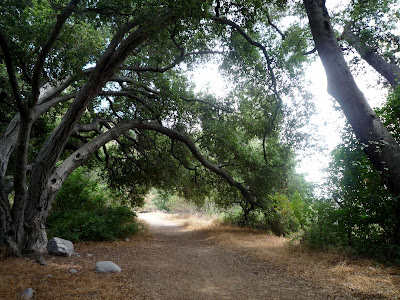
So, I really wanted to go on a hike today. Sadly nobody was available so it was a "solo" hike... solo as in by myself, but it seemed like a bunch of other people had the same idea to enjoy the sunshine out in the low San Gabriels. I went to Eaton Canyon for a pretty easy but fun hike, fairly crowded but definitely worth it 4.5 miles or so (in and out) and with fun creek crossing and a waterfall at the end.
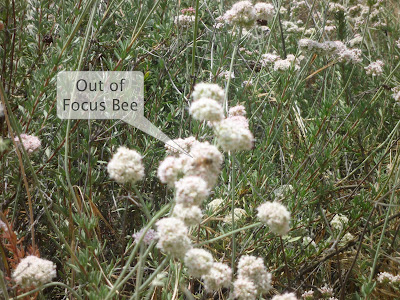
So happy to see bees!
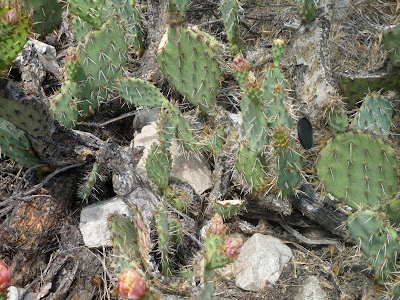
at one point i dropped the lenscap of my holga into the cactus... :T I rescued it but boo of course that would happen.
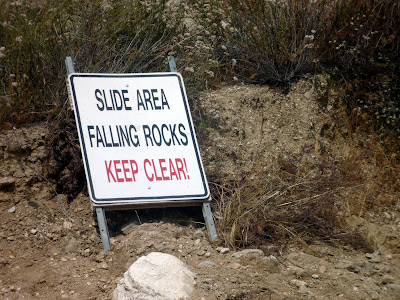
hiking in LA is kind of weird because there's a weird mix of urban and nature.

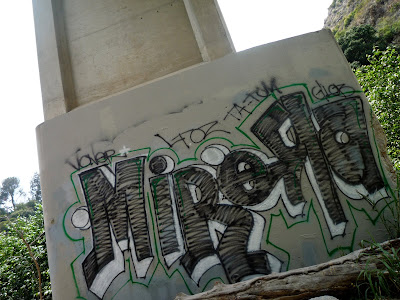
but there's plenty of nice naturey bits too

From Eaton Hike the fun part of this hike is the creek crossing(s)

From Eaton Hike 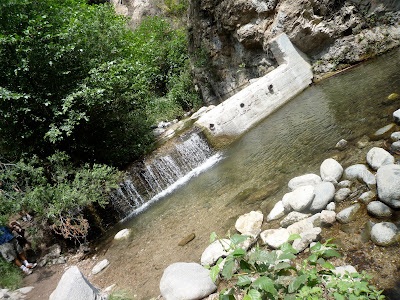
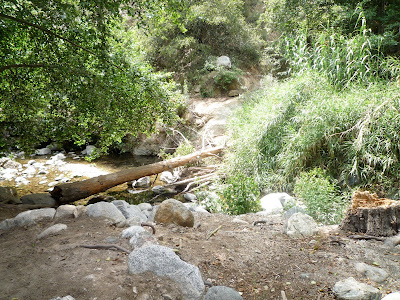
From Eaton Hike that isn't the waterfall
From Eaton Hike Here's the waterfall!

From Eaton Hike When I got to the waterfall I heard “on belay” so I knew there were rockclimbers... but then when I turned the corner I saw people climbing up the waterfall. (plus quite a few people watching them)
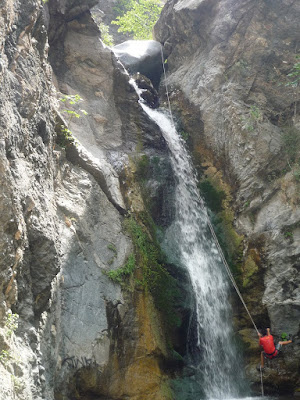


oh LA....

a rock with anchors for climbers.

On the return, I took a side hike (there are tons of side trails, I took a side trail for most of the way in with lots of rocks, but I got a little stuck at one point so I took the more trodden path after a bit) anyway I took a path on the way back that led me to the bridge.
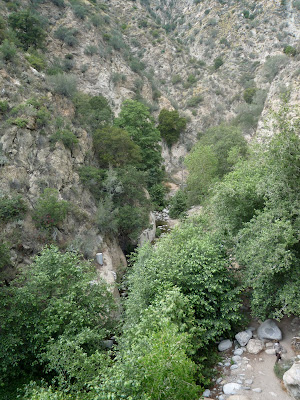
here's the second half of the trail after the wider, more trodden path turns into the more naturey part on the way to the waterfall.
June 6, 2009


May 10, 2009
-
south american vacation, by the numbers
-
10 = number of days gone
-
2 = countries, Chile and Argentina
-
4 = cities, Santiago, Puerto Varas, Bariloche, Buenos Aries
-
37 = days since I've been back to get this post up
-
5 = hours napped in our hotel room once we landed
-
1 = volcano climbed
-
3 = hours on a horse in the gorgeous Chilean lake country
-
4 = chocolate shops walked into in Bariloche
-
4 = chocolates shops from which gus bought chocolate
-
4 = steaks eaten in the time we were there
-
1 = steak sandwich
-
6 = lines we stood in at the airport to leave Argentina
-
1 = cross country bus to cross from puerto varas, chile to bariloche argentina, where they gave us a snack pak
-
1 = lake crossed and then recrossed
-
1 = mini microclimate rainforest in which we hiked
-
12 = other members of the tour
-
4 = other members of the tour who were under 50 (the old brits were a blat, loved them)
-
2 = domestic flights taken
-
942 = pictures that were downloaded from the trip that I didn't delete
-
428 = pictures taken by my travel buddy
-
12 = pictures that I posted on facebook
-
129 = pictures on the picasa album
-
3 = undeveloped rolls of film waiting to be developed from my holga
-
1 = birthday celebrated by travel buddy
-
1 = columbian travel guide
-
??? = pictures of me and buddy jumping our way through south america
-
?? = pictures of buzz lightyear in chile/argentina
-
1 = cemetery toured in
-
3 = hour tour of buenos aires where we saw the rich buildings built to mimic paris, and the poorest of the poor.
-
1 = winery tour
-
1 = tango show
-
1 = post by gus on her trip
-
9 = pictures posts by travel buddy since coming back
-
1= contrite gus for being so lazy.




-
April 28, 2009
-
why, hello there!
hello friend!
i have things to say and stories to tell but feeling kinda quiet.more to come soon.
April 14, 2009
-
BURGER NIGHT!

From burger night 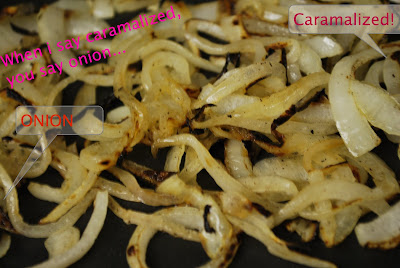
From burger night 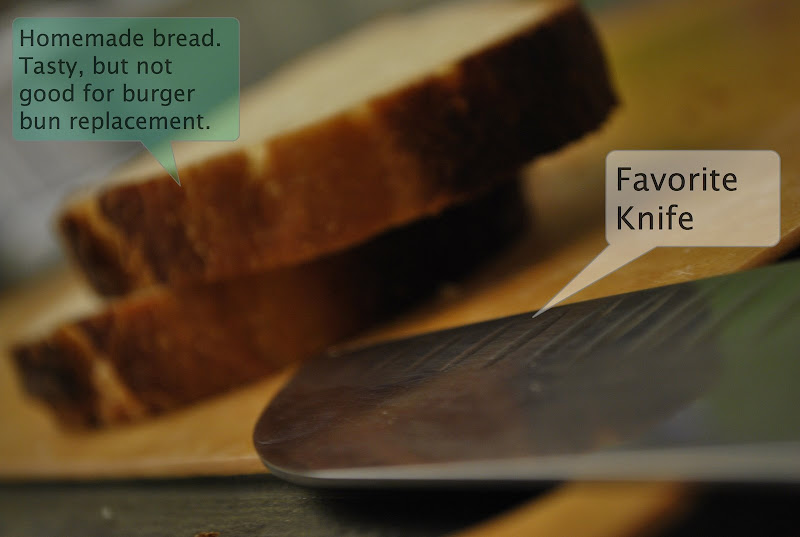
From burger night 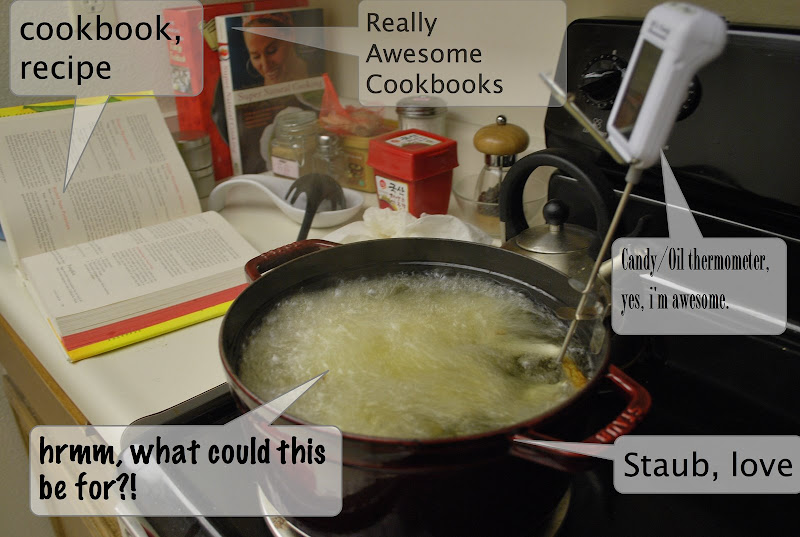
From burger night 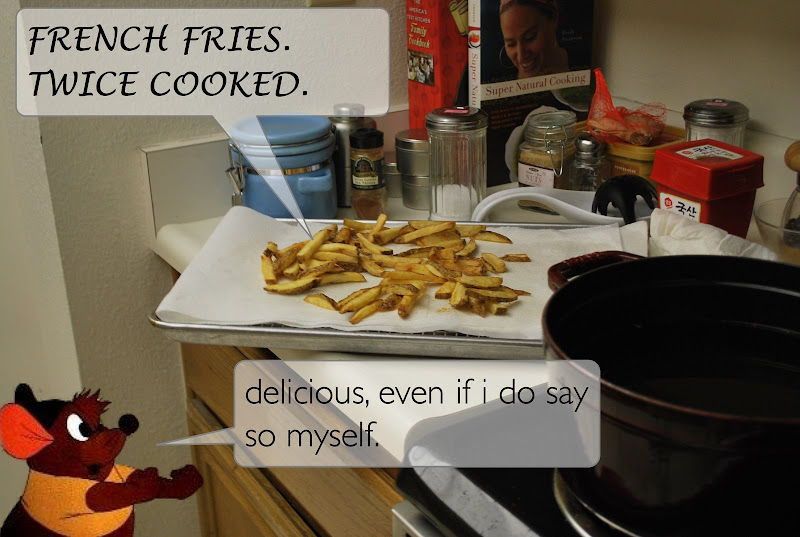
From burger night final product:
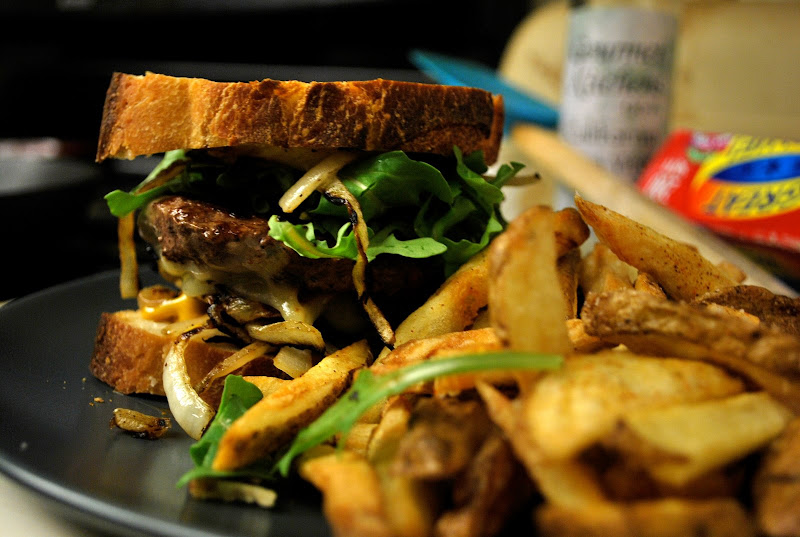
From burger night
March 16, 2009
-
farmers market + time = sunday dinner
i found myself at the h'wood farmers market. bought some raw milk got lectured by a couple of hollywood residents about the benefits of raw milk (meh, i'm more curious to see if it tastes better). but on a more exciting note bought myself some lovely thai broccoli, purpley kale, and yellow chard! tonight i decided to make a pseudo korean, thai, chinese dish that i think i'll be calling pad si wow! korean rice cake instead of wide rice noodles, a mix of oyster, soy, chili bean, garlic, basil oil, sake, honey and chili peppers for the sauce with a little egg and tofu. i think it turned out well and was also well deserved. this was a busy weekend for me a seven mile hike out in joshua tree yesterday plus dance class today = tired gus.


March 11, 2009
-
rewind: taco night fail 2/17/09
a little while back, our friend minj went to the east coast and after some group chatter it was decided that we would all try to eat the kogi truck since several of our friends hadn't tried it yet. this eventually evolved into a decision to eat tacos at a westside tacqueria together as a group and then go to kogi afterwards.

Adam our friend and resident obsessive of tacos was fine with it until he heard that the taco place we were going to go first on the westside was not a truck... he was inconsolable, until i said we could swing by a truck on the way.

Amy refused to drive or let us stop lest we be late so poor adam had to eat in the car.

Granted, Adam had a point tacqueria tacos generally aren't as good as our Highland Park taco trucks (though with my friday night westside geek nights and fiesta de tacos i've been exploring taco options with some buddies and have found places that have their own special advantages). We went to one of el super taco's new locations, it wasn't as good as i remembered, except for these nachos:

out of focus likely because i (a) don't really know how to use the camera and (b) i was faint with hunger
minj thoughtfully brought us treats from new york.

i snuck a pic of our benefactor. i love macarons.
We then attempted to complete our taco night but it was a fail as the kogi truck was late.
 .
. and poor a and a had to leave early.

February 26, 2009
-
respite
last weekend i made a brief escape from so.cal. and went to meet up with some friends in the berkshires. time flew, but we were having fun (and fantastic food), and i miss it already. here are a few of my favorite (non-embarrassing) pics from this past weekend.

Our lovely host/organizer.
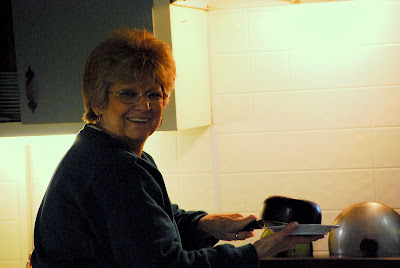

On the way into the Berkshires we stopped in Chester to grab some breakfast, expecting cold doughnuts and a cup of coffee. Boy were we wrong, we met Phyllis and a bunch of other local folk who were just chattin' it up in the area. Phyllis hooked us up with the best breakfast sandwich I'd ever had. She makes them in this little kitchenette in the back of her general store.
I loved Phyllis. And the sandwich.

When we got there, sjolsdjf taught us how to make scallion pancakes. Simple and delicious.

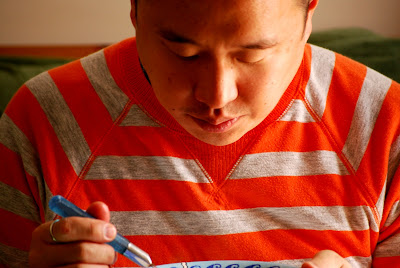
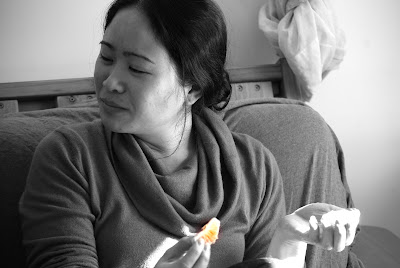
The NY contingent of our party came up and also provided tons of food and fun.
We got to romp in the snow! The left picture is of us on a frozen lake!


More romping! Romp! Romp! Romp!


I got to play around quite a bit with my zoom lens and it's pretty fun to be able to zoom in on people without them realizing quite how close you're getting. sjoldsjf, on the right, her sunglasses (if you can zoom in) reflect the rest of us. I tht it was fun.

More romping! You probably can't see it from here, but their faces were pretty hilarious.
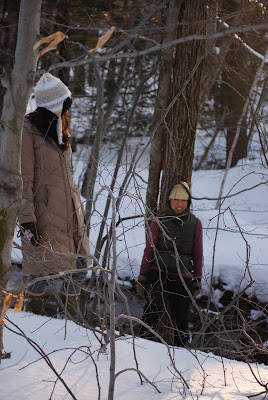

for some reason, i absolutely love the pic on the left. and even though the one on the right is super cliche, i still like that glowy feeling it gives me.

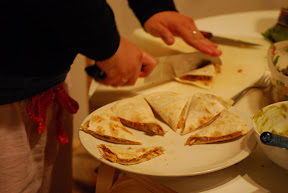
and tho these pics are pretty terrible i just wanted to throw these in cuz we ate so well. beer simmered chicken quesadillas, ramen and sausages, and butternut squash and kale, hot chocolate, ox tail soup, scallion pancakes...... SO. MUCH. FOOD.


February 18, 2009
-
recommended reading
*from my friend banrockstation. I had Gillers as a prof, and I regret now not engaging with him when I had the chance.
Reproduced below and attached in Word format is the text of a talk given
by NYU Law School Professor Stephen Gillers last Friday night at Central
Synagogue's Jethro Shabbat dinner. Those present found it exceptionally
interesting and provocative.
-------------------------------------------------------------------
Is Law (Still) an Honorable Profession?
Stephen Gillers
When Ron Tabak e-mailed me about giving the Jethro talk this
year, I was in Cambodia speaking about the American legal system to
graduate law students at the Royal University of Law and Economics. That
experience offered one further example of the intense interest globally
in the rule of law in the United States. To my mind, the rule of law is
America's best export. If we can instill in other nations our respect
for the rule of law, an independent bar, and an independent judiciary,
we will go along way toward the creation of democratic institutions
worldwide.But our achievements in establishing a nation based on the rule
of law should not be allowed to obscure problems with the work of
lawyers here at home.When Ron and I agreed on the title of the talk, I was not yet clear on
what I would say about honor and the legal profession although I had
some vague ideas.Events this fall, however, have clarified what needs to be said.
When talking of honor, one could hardly begin in a better place
than the events surrounding the fall of Bernard Madoff. So I will. I
will then move to the question posed in my title and conclude with
references to the bible.What I find most remarkable about the Bernard Madoff story so
far is that his sons turned him in. Bernard Madoff confessed to his sons
and on the advice of counsel, they turned him in. And the whole business
came crashing down.I don't question the legal advice or the sons' action. What
puzzles me is something else. Why did no one do this sooner? Why did it
take so long? Sooner or later, the fraud would be revealed. Tens of
thousands of people would suffer. Those who invested would suffer.
Charities dependent on donations from the investors would suffer. All
those whom the charities helped would suffer. And the suffering would be
great. Is great.Now, the incontrovertible fact is that it is impossible -
impossible - to run a business like Madoff's in our highly regulated
society without the help of professionals -accountants and lawyers - all
along the way. Did none of them know? Did none have suspicions? Did they
look the other way? We will in time, I hope, get answers to these
questions. Unfortunately, they are not new questions. They are asked in
the wake of all great frauds.Stanley Sporkin asked them after the S&L crisis of the 1980s. The
government took control of failed banks, including Lincoln Savings &
Loan. Charles Keating, CEO of Lincoln's parent, challenged the
takeover. In rejecting the challenge, Judge Sporkin wrote this now
famous passage:"Keating testified that he was so bent on doing the 'right
thing' that he surrounded himself with literally scores of accountants
and lawyers to make sure all the transactions were legal."The questions that must be asked are:
"Where were these professionals, a number of whom are now
asserting their rights under the Fifth Amendment, when these clearly
improper transactions were being consummated?"Why didn't any of them speak up or disassociate themselves from
the transactions?"Where also were the outside accountants and attorneys when
these transactions were effectuated?"What is difficult to understand is that with all the
professional talent involved (both accounting and legal), why at least
one professional would not have blown the whistle to stop the
overreaching that took place in this case."Judge Sporkin's questions are no easier to answer today than when
he asked them.We do know that lawyers and auditors for the failed banks paid tens of
millions of dollars to settle civil claims based in part on their
silence. Or their insurers did. Was the price of silence then merely a
cost of doing business? A ledger entry? Nothing more?The New York courts did not heed Judge Sporkin's questions when in
December they adopted new Rules of Professional Conduct for lawyers,
effective April 1, 2009. In the current climate, you might expect that
the courts would have made it a bit easier for lawyers to reveal client
information to stop fraud or prevent great harm, especially if the
lawyer discovers that he or she has unwittingly assisted the fraud.
Following the corporate scandals of the last decade, the ABA Model Rules
of Professional Conduct and rules in many states were changed to grant
this authority. It is not a radical idea by any means. But not only did
the New York courts not adopt these ABA provisions, the new rules they
did adopt actually further limit a lawyer's duty to reveal fraud than
exists today under New York's current rules. We're backsliding here in
New York, the nation's financial capital.The title of this talk is "Is Law (Still) An Honorable
Profession?" So I have to say what I mean by honor? It is more than
acting lawfully. It is that, certainly, but it is more. It is also how
you behave even when you can do as you please, especially then. Honor,
at the least, means not exploiting the trust of vulnerable others for
your own advantage - including strangers - who are relying on certain
basic standards of human decency.Honor shares the stage with two other civilizing qualities. One is
shame. To value honor is to be capable of shame. For the shameless,
honor does not exist. They don't prize it and they don't miss it. The
other quality is empathy even for those you do not know. Empathy is
compassion for the plight of others, because you understand that they
are tied to you and you to them.Honor, shame, and empathy, then, make up the glue of civilization.
Without them, things will fall apart. And as bad: when the public sees a
loss of honor in how institutions and professionals behave, we have a
loss of trust. That is what we see happening now. Some examples:
Reviewing Charles Morris's book, The Trillion Dollar Meltdown, in
the New York Review, Jeff Madrick writes: "Morris makes it clear that it
was an unquenchable thirst for easy profits that led commercial and
investment banks in the US and around the world
- as well as hedge fund, insurance companies, private equity firms, and
other financial institutions - to take unjustifiable risks for their own
gain, and in so doing jeopardize the future of the nation's credit
system and the economy itself."George Packer, in a recent New Yorker, describes in wrenching
detail the plight of some of the vulnerable victims of this behavior -
blue collar people in southwest Florida who have lost their jobs and
sometimes their homes. These are people largely invisible to the masters
of the financial universe who produced the mess under which they now
suffer.In the New York Times, Gretchen Morgenson's columns have shown
that the credit-rating agencies gave ridiculously optimistic grades to
mortgage backed bonds. The bond issuers paid the agencies' fees. The
income from this part of the agencies' business was especially
lucrative. Put two and two together: The inference is compelling.
Elsewhere, health, not wealth, has been jeopardized. In January
Eli Lilly agreed to pay $1.42 billion to settle a probe into alleged
improper marketing of the antipsychotic drug Zyprexa. Gardiner Harris
reports in the Times: "Among the charges, Lilly has been accused of a
scheme stretching for years to persuade doctors to prescribe Zyprexa to
two categories of patients - children and the elderly - for whom the
drug was not federally approved and in whom its use was especially
risky.... The company...pressed doctors to treat disruptive children
with Zyprexa, court documents show, even though the medicine's tendency
to cause severe weight gain and metabolic disorders is particularly
pronounced in children.Over the last decade, Zyprexa's use in children has soared."
And staying on health, Marcia Angell in the New York Review,
Gardiner Harris in the Times, Senator Charles Grassley with subpoena
power, and others have told of psychiatrists with economic interests in
a drug, sometimes along with their universities, or who have received
huge consulting sums from drug companies, then doing National Institute
of Health studies on those very drugs or on drugs owned by the very
companies that paid them so handsomely. Some universities did not
enforce their conflict of interest rules. Some of this conduct also
violates NIH conflict of interest rules.A particularly outrageous example of dishonorable behavior in my
lifetime was Big Tobacco's decades long suppression of conclusive proof
that tobacco kills, while all the while implying the contrary, including
in ads targeting young people. I needn't ask Judge Sporkin's questions
this time. We know where the lawyers were. Big Tobacco's success in
hiding the science that showed that tobacco kills was accomplished with
the highly creative help of clever lawyers who managed to bury the
information by concocting a theory that the laboratory results were
protected by the attorney-client privilege.Which takes me back to lawyers. As I say, in our regulated
economy, lawyers are deeply embedded in all sophisticated commercial and
financial transactions. So, often, in situations like those I've
described and others, the conduct would not have been possible at all or
for long without the assistance of lawyers. Or if not the assistance,
than with the knowledge and acquiescence.Let me be clear: It is more than honorable to help clients
achieve their goals under law. And it is more than honorable to be
devoted to a client's goals. In a civilized society, it is necessary.
Lawyers say, with justification, that it is not their job to judge the
worthiness of the clients' goals, only if those goals are legal. A
lawyer is but an advisor on the law, they say. The client calls the
shots.And almost always, this is true. But it is not always true.
Sometimes, this defense undermines the rule of law itself. Our popular
model for the work of lawyers - the way lawyers are portrayed in popular
culture - envisions a trial lawyer, usually a criminal defense lawyer,
whose arguments can be challenged by an opposing lawyer and will be
exposed to the ruling of a judge.This is a misleading model. Most American lawyers are not trial
lawyers. They are counselors or advisers, operating where there is no
judge and no adversary. No one is watching. And there may never be.
Then, the temptation is to push the limits, sift the language of the
law, find hidden meanings. Now, our social understanding is that law is
not endlessly pliable in this way. But the problem is this: It can be
made to be because law, after all, is only a language and language is
pretty pliable. In the hands of a creative, motivated lawyer, with a
demanding client, the language of the law can have astonishing
elasticity. Through interpretation, the rule of law can be turned into
what it is not. A fine exercise if you're interpreting Shakespeare or
Kafka. But not for law.Our law cannot be defined solely by the limits of a lawyer's
linguistic imagination.That is a recipe for destabilizing the rule of law, not preserving it.
Are you shocked by the torture memos the Justice Department
lawyers wrote during the Bush years, some of which were later disowned
by the same Justice Department in the face of popular repulsion? So am
I, especially after I had a chance to study them closely.They are worse than you think. They are dense, with hundreds of
footnotes. This is no accident. They are dressed up to appear scholarly,
erudite, learned. But they are junk law.The torture memos are but a far more egregious example of the
kind of lawyer behavior I'm describing. Push the limits. Use your
imagination. Who's looking? The client wants it.If the client is ever challenged, it has an excuse. The lawyers said it
was okay. That is in fact what former federal officials now say. "We had
a legal opinion."A lawyer who uses his or her legal education and skills to
distort the law, to destroy the rule of law, because he or she is adept
at manipulating language, when no judge, no adversary is watching, is as
blameworthy as the client. You cannot hide behind your professional
mask.What I have just said may seem unremarkable to nonlawyers. To
many lawyers, it will sound like blasphemy, a rejection of the duty of
loyalty to the client. My reply: Loyalty does require you to aid
morally offensive goals, even if they are legal.Or lawyers may say, "but if I decline, someone else will do it.
So what is gained?"My reply: "Let someone else do it. But not you. Honor is personal. Worry
about yourself.You don't get a pass from moral responsibility because you acted for a
client."That's the first lesson I would offer, aimed at lawyers. A
second lesson, aimed at all, is this: Keep ready your capacity for
outrage. This is very important. Next to the vote, outrage is the one
response each of us can contribute. Outrage is how honor must confront
dishonor. If we lose the capacity for outrage, we are in serious
trouble.It is tempting to put outrage aside. There are other things to
do every day: make play dates, plan dinner, read a novel, learn Italian,
not to mention our jobs. Outrage takes energy. It is stressful. Today,
the demand for it is seemingly endless.Nonetheless, outrage is a duty of citizenship. It's opposite is
complacency, which will bring more reasons for outrage in a downward
spiral.I'm a lawyer and law professor. For more than 30 years I've
taught legal ethics. So maybe I can be forgiven for believing that honor
among lawyers is the best hope for a civil society, especially in times
like these when it can daily appear that those we believed were good
people, good institutions private and public, good companies, seem to
have lost their moral bearings, that we have a scarcity of honor and
capacity for shame. If the bar loses honor and capacity for shame, what
have we left?We have the clergy. Necessary but not sufficient.
So here is my third lesson, again for lawyers: Do not become
skilled facilitators of whatever legal goal a paying client may desire.
That's not what you envisioned for yourself when you answered the
question on your law school application: "Why do you want to study law?"
Practice saying no. No has moral power. It can be liberating - for you
and for your client.I would have hesitated to give this advice if I did not have
eminent precedent.Elihu Root, Nobel Peace Prize laureate, Secretary of State under
Theodore Roosevelt, said it better a century ago: "About half of the
practice of a decent lawyer is telling would-be clients that they are
damned fools and should stop."And more recent are the words of Thomas Shaffer, an emeritus
professor at Notre Dame Law School. Professor Shaffer often writes about
legal ethics and religious values.He gave a speech at Vermont Law School some ten years ago. It became an
article in the school's law review. The title is Jews, Christians,
Lawyers, and Money. It began:"Years ago, when I was the resident guru in legal ethics at Washington
and Lee University, in the little mountain town of Lexington, Virginia,
a reporter from the daily newspaper in Roanoke asked me to identify the
most serious ethical issue for American lawyers.My answer: 'Money.'"
And Shaffer continued with references that resonate today: "My
purpose so far is to suggest to you that money is the number-one most
serious moral problem for American lawyers and their clients. My moral
observation is biblical: God destroyed the biblical cities of Sodom and
Gomorrah in a rain of brimstone and fire. The Rabbis of the Mishnah
wondered why. They did not decide, as many Christian preachers have
decided, that God got upset because of the Sodomites' sexual
irregularities. It wasn't sex. The reason for the destruction of Sodom
was money."The Rabbis said the relevant text is in the Book of Leviticus.
"Thy brother may live with thee." The wealthy Sodomites were not
generous to one another; they did not take care of the poor.... Sodom
was destroyed by God, in the view of the Jewish tradition, because
"individual selfishness . . . had become an integral part of its
communal culture."The book of Leviticus also says: "You shall not put a stumbling
block in the path of the blind." The sages of Judaism decided that the
rule does not apply to those who harass blind people as much as it
applies to those who misuse the law, who are dishonest, but legal, who,
"through perfectly legal transactions," mistreat vulnerable people....
Let this be our lesson, too.

Archives
- April 2013 (1)
- January 2013 (1)
- November 2012 (1)
- June 2012 (1)
- May 2012 (2)
- December 2011 (2)
- November 2011 (9)
- October 2011 (2)
- September 2011 (5)
- August 2011 (2)
Recent Comments